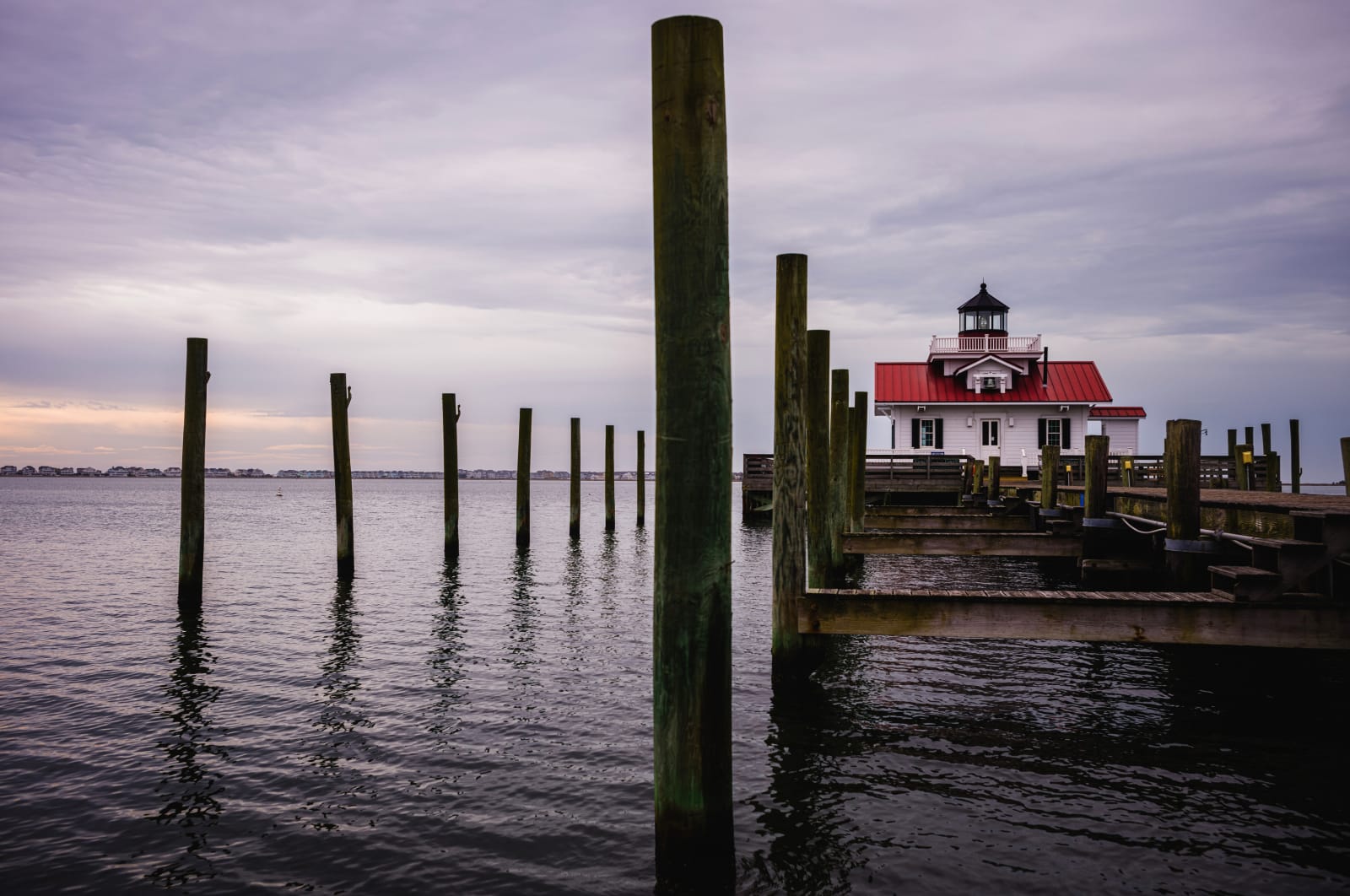
If you've spent any time around boats, you've seen it happen. The lines are tied off. The engines are finally quiet. Someone walks down the dock carrying a beverage in hand. A conversation starts: "How was the crossing? Any trouble at the lock?"
"Did they ever move that buoy?", "where'd you spend the night?"
For a few minutes, information changes hands. A little local knowledge, a lot of hard-earned experience. If you're lucky - a lesson someone paid to learn so you don't have to. I love these moments. If you do too, I suspect you've landed in the right place.
The lessons that shaped a lifetime of boating
I was fortunate to be raised by one of Boston's own lifelong boaters. Growing up, each night before bed my dad told me stories only of the ocean. These narratives usually began with tales of huge ships at sea taking waves forty feet high - watching catwalks he just came from being swept away in front of his eyes.
The Aircraft Carrier USS Saratoga (CVA-60) had indeed encountered a fierce Atlantic storm on return from the seven-day war (June 67) while transiting stateside later that December, causing heavy damage to not just the whole of the external catwalks lining the flight deck, but everything from the garbage shoot to the boat sponsons. She limped back to Mayport before spending 11 months at the Philadelphia Naval Shipyard for an overhaul. The tall tales from sea I grew up assigning as lore - were in fact true.
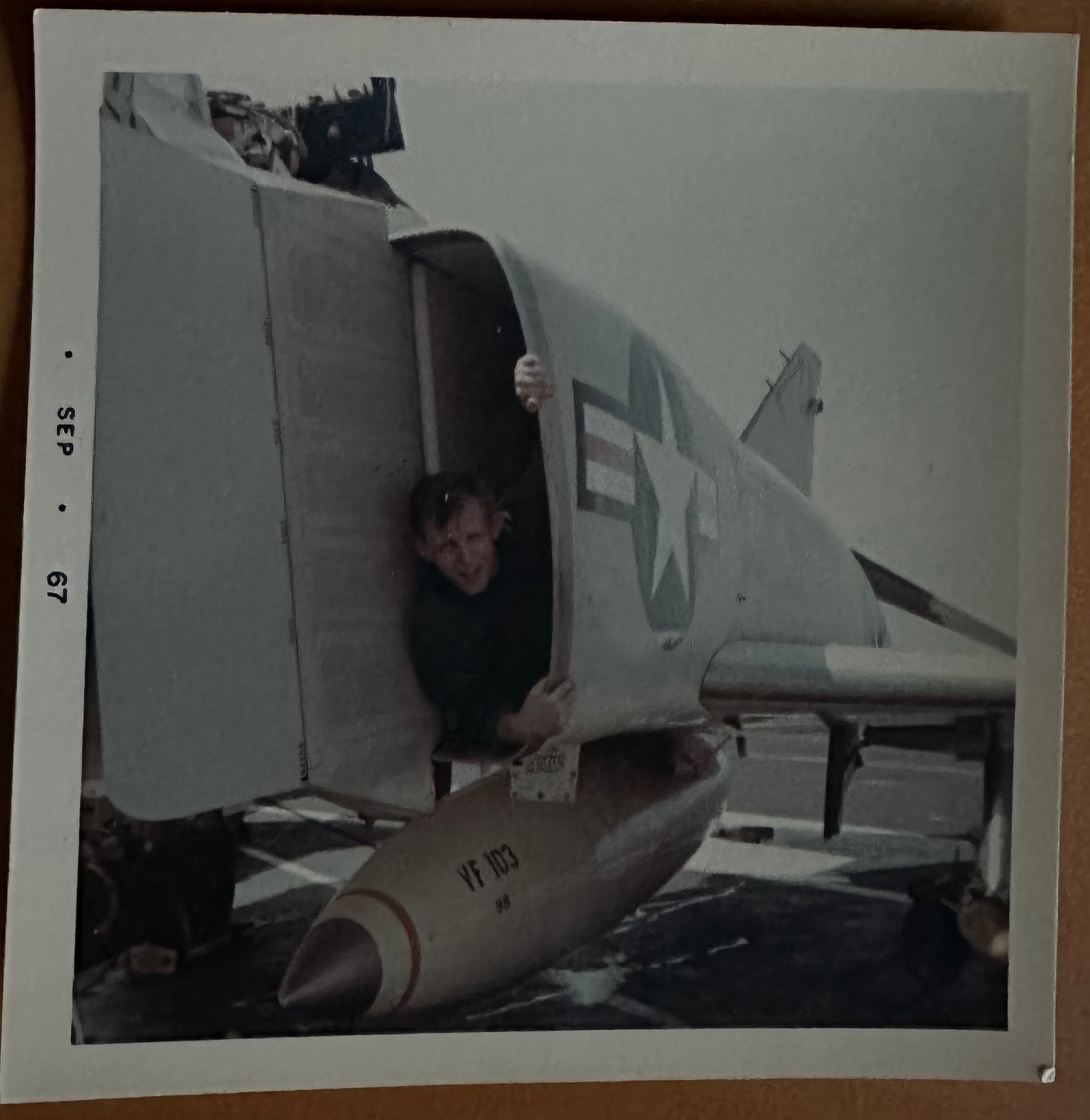
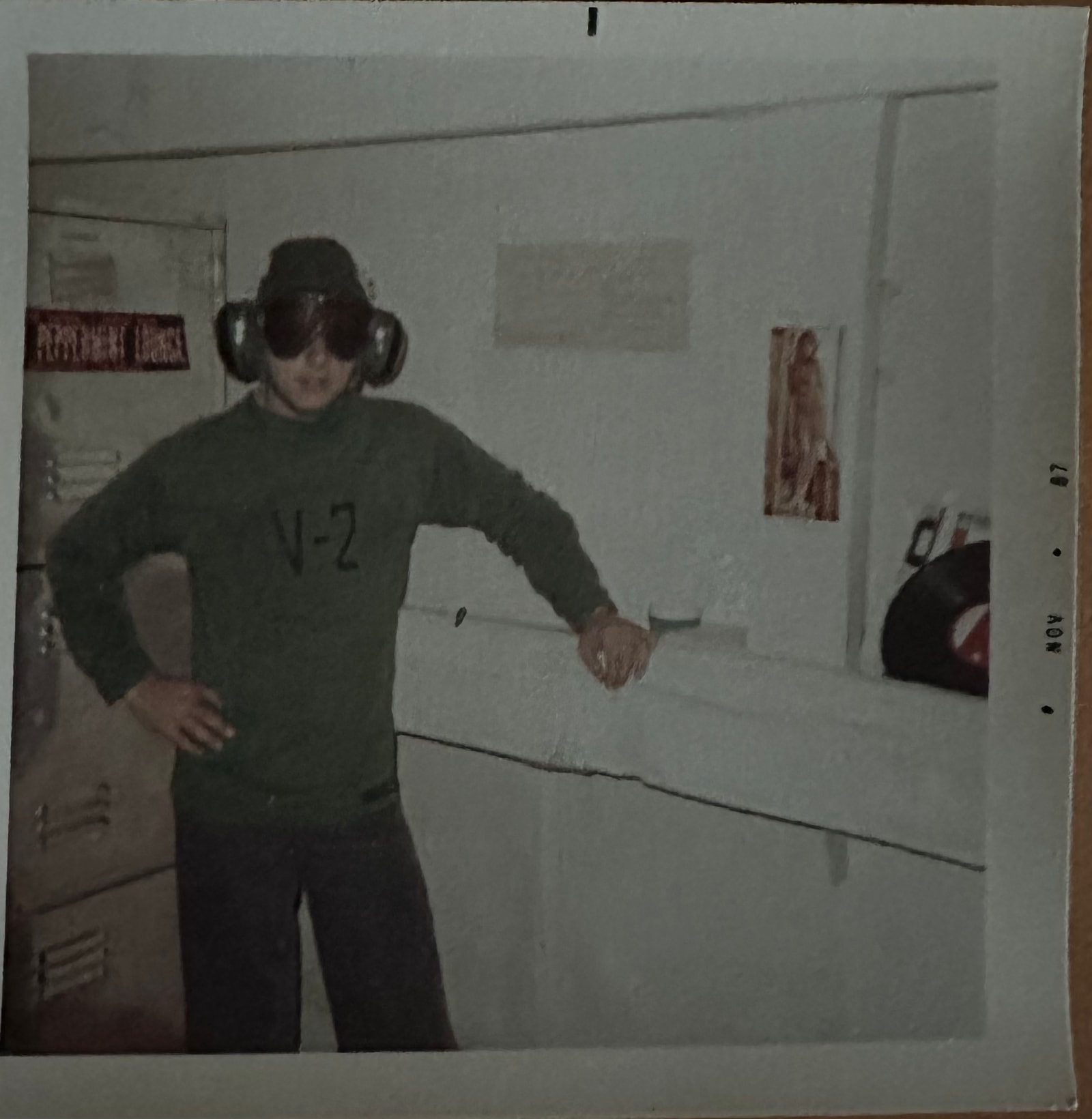
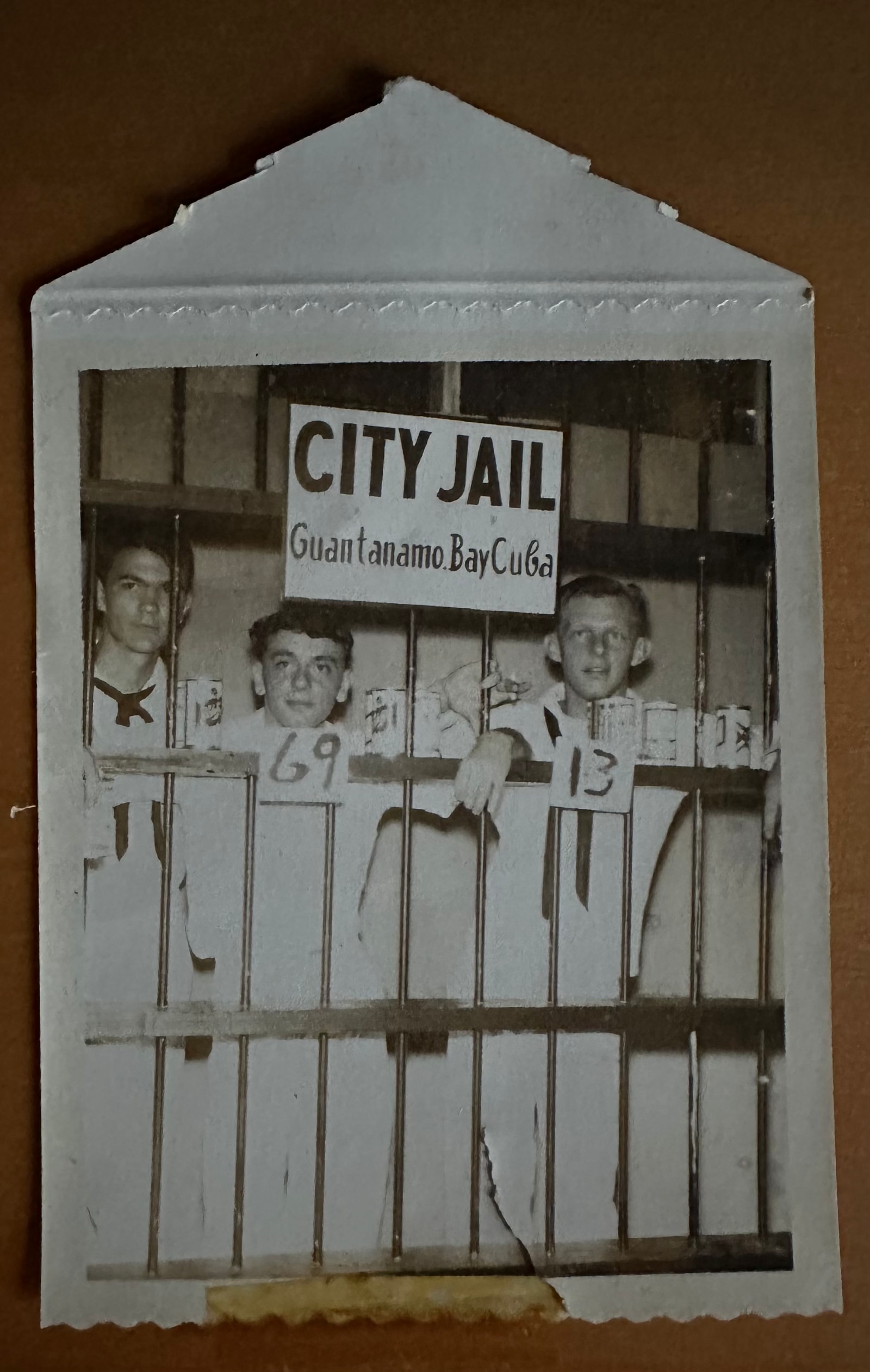
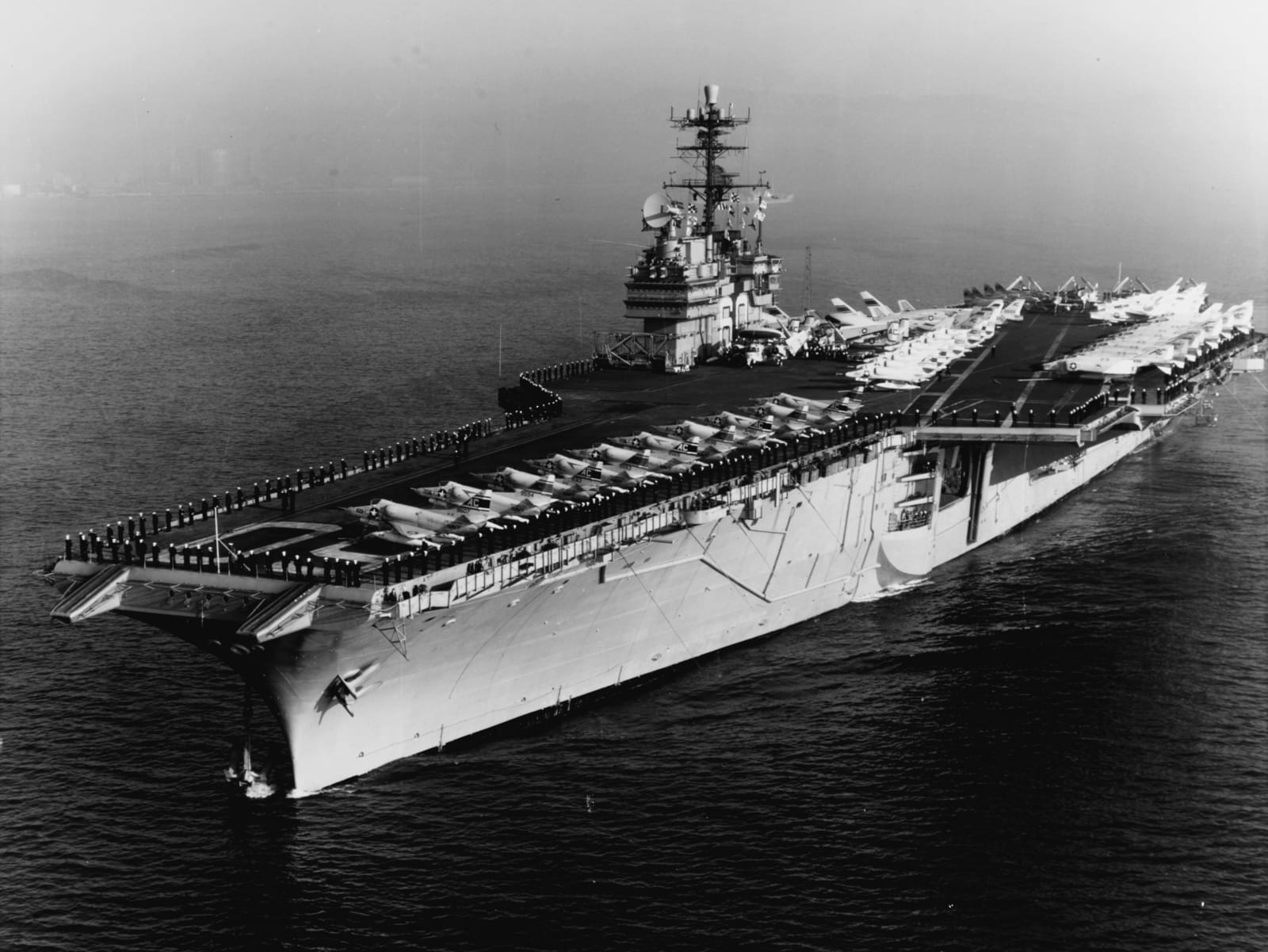
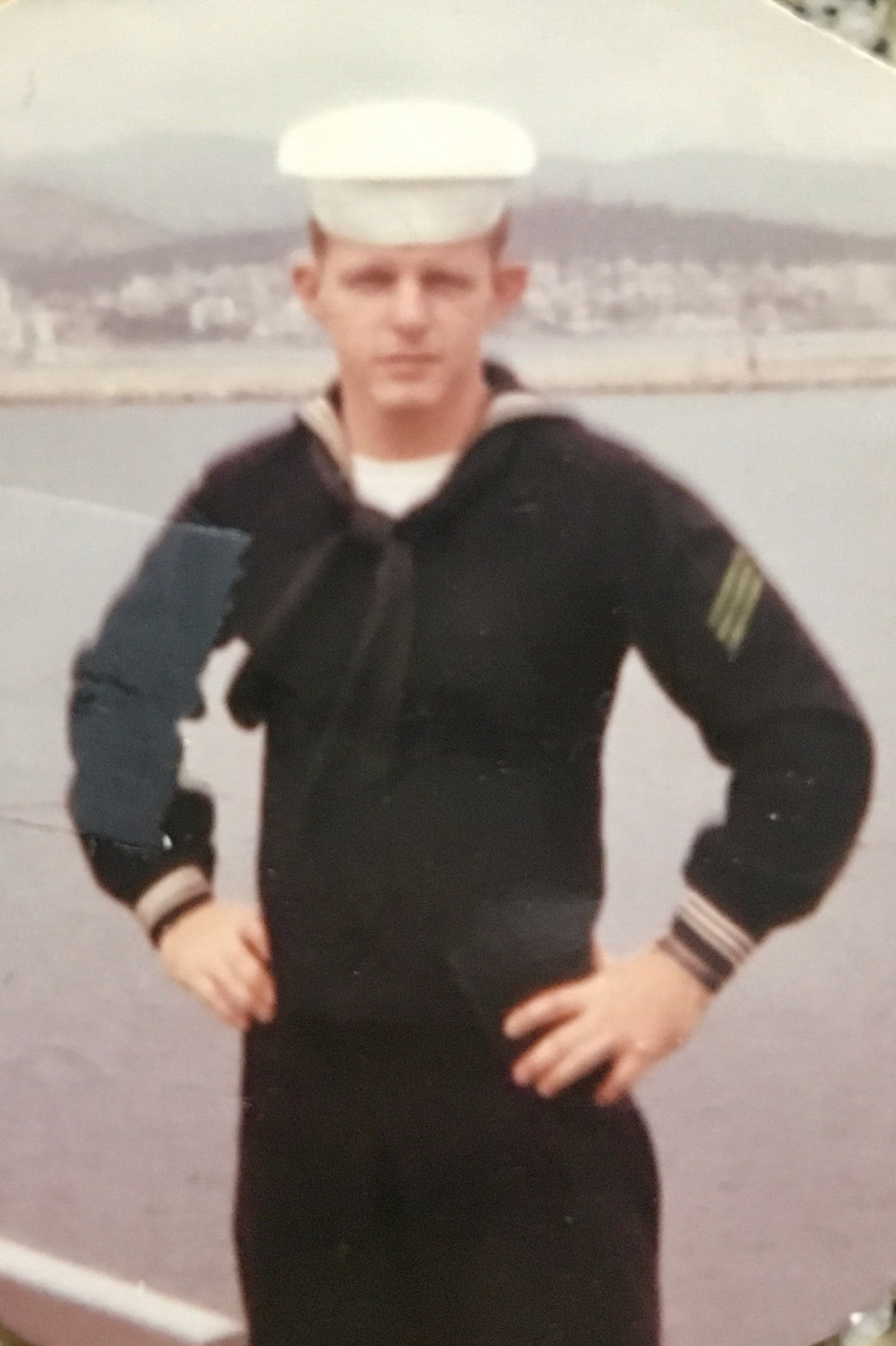
Photographs from the USS Saratoga's Tour in 1967.
When my eyes got too big or it was too late at night for such honesty, stories pivoted to revolve around "wind-jammer cruises" during the 80's and sport fishing for Marlin with photographs to back up the wild claims.
When it was time to get on the bus to go to school the next day, his favorite yankee tendency was to wait for a morning when it was deeply cold and rainy before sharing that:
"When I was a kid, on days like this - we took two towels to the beach"
My first boating license came from a USCG power squadron class at age 11 in rural Alabama. I distinctly remember being both the youngest participant, but also the only one who raised a hand when a question was asked. Although I was a poor student traditionally, I more than understood the consequences and subsequent freedom a boat license would unlock on this transportation arbitrage some five years before being allowed to legally drive a motor vehicle. After all, who needs a drivers license when you have a boating license?
While West Point Lake near Valley, AL and West Point, GA was no match for the stories of the Atlantic crossings and tales from the number four catapult captain I grew up hearing - it sure didn't matter to me. Like my dad, I didn't just want to be "at the boat" in summer, but year round.
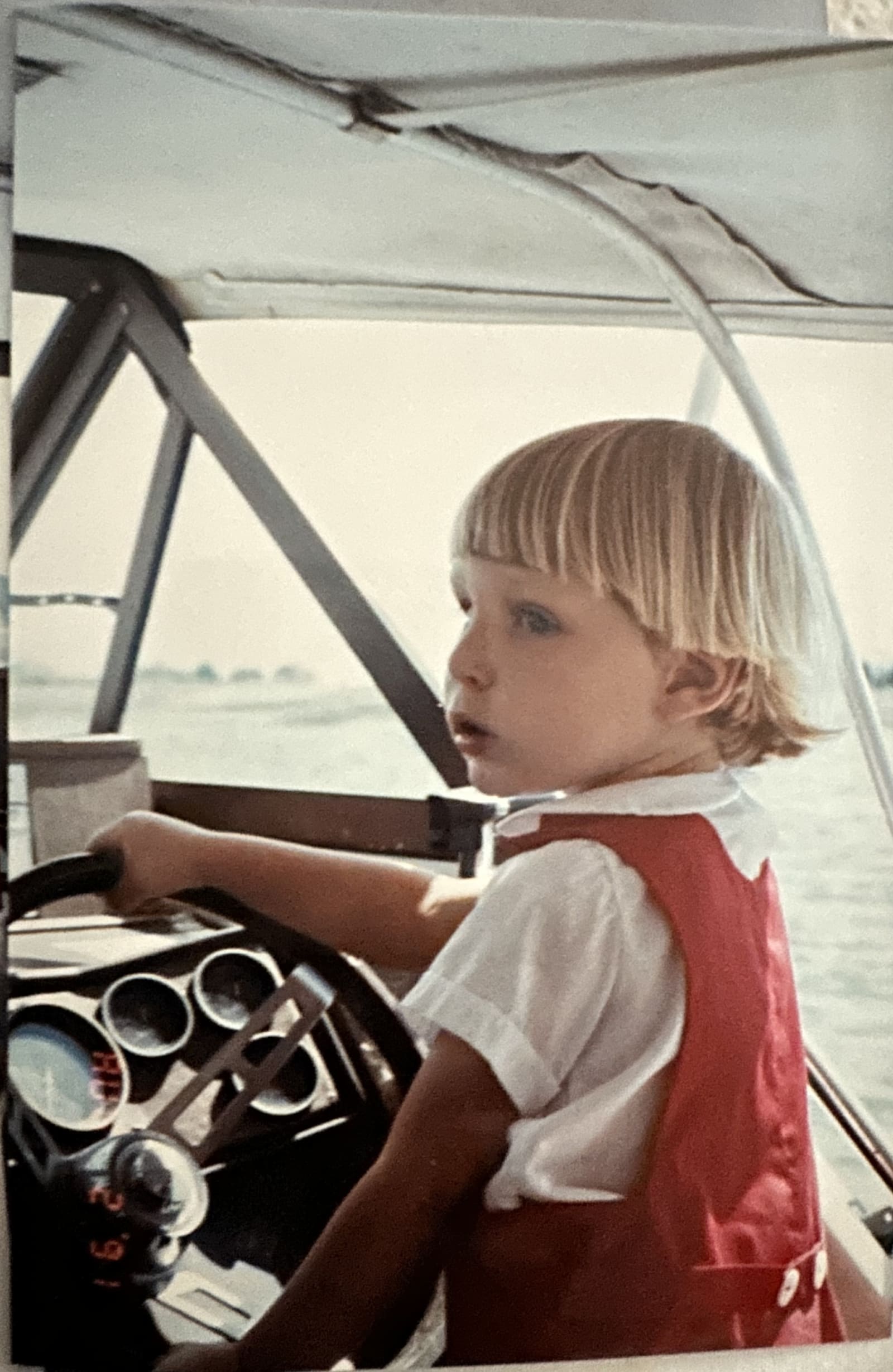
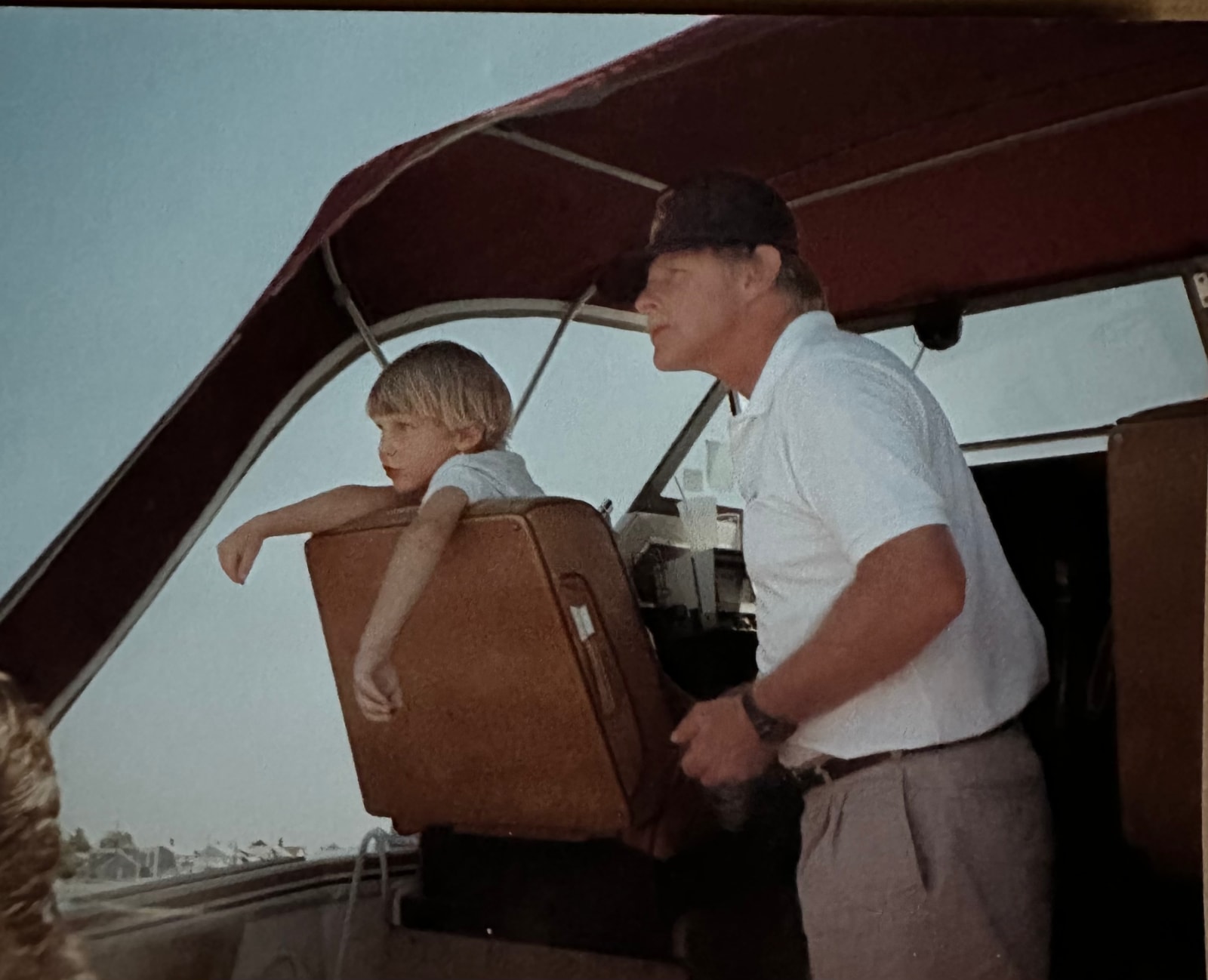
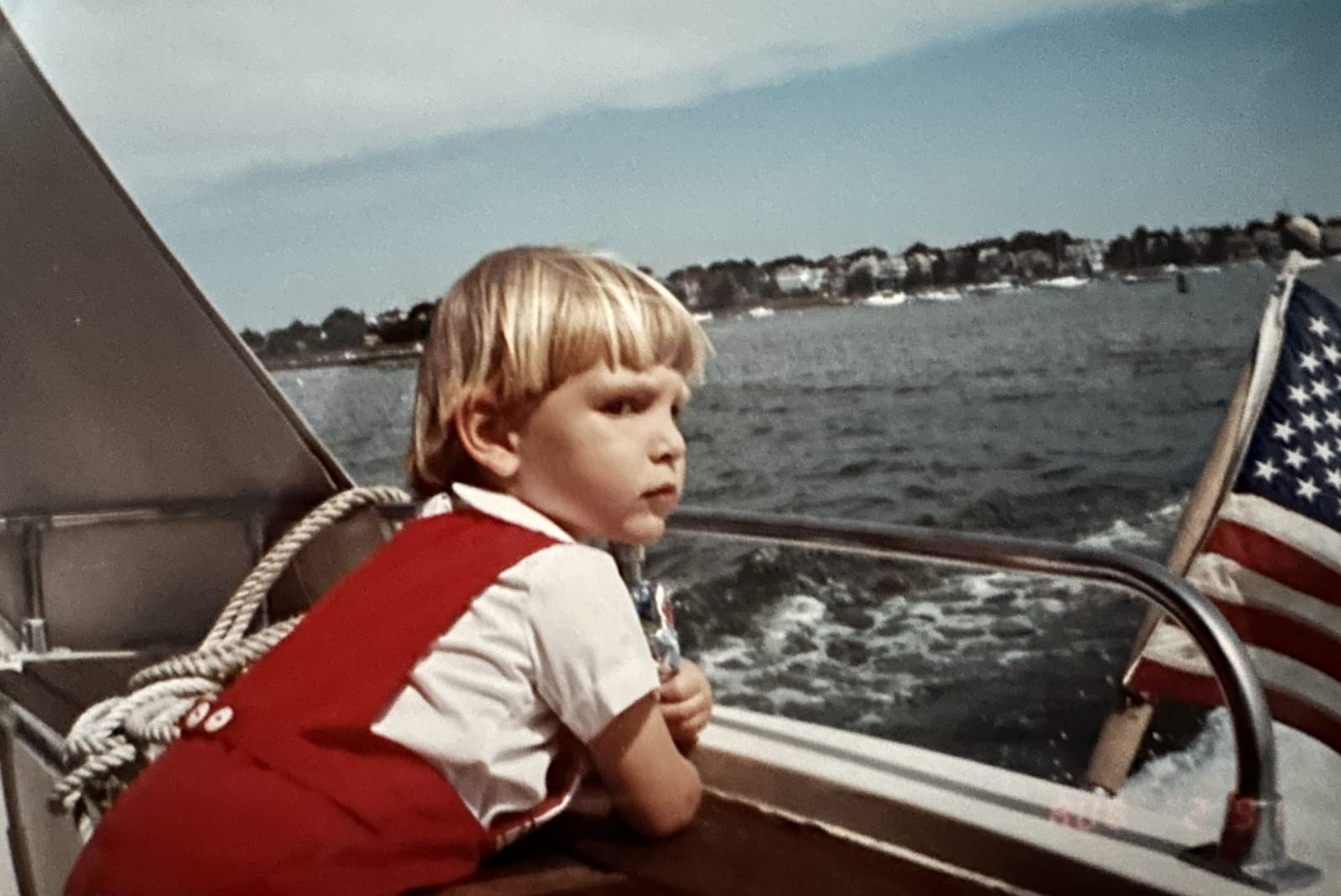
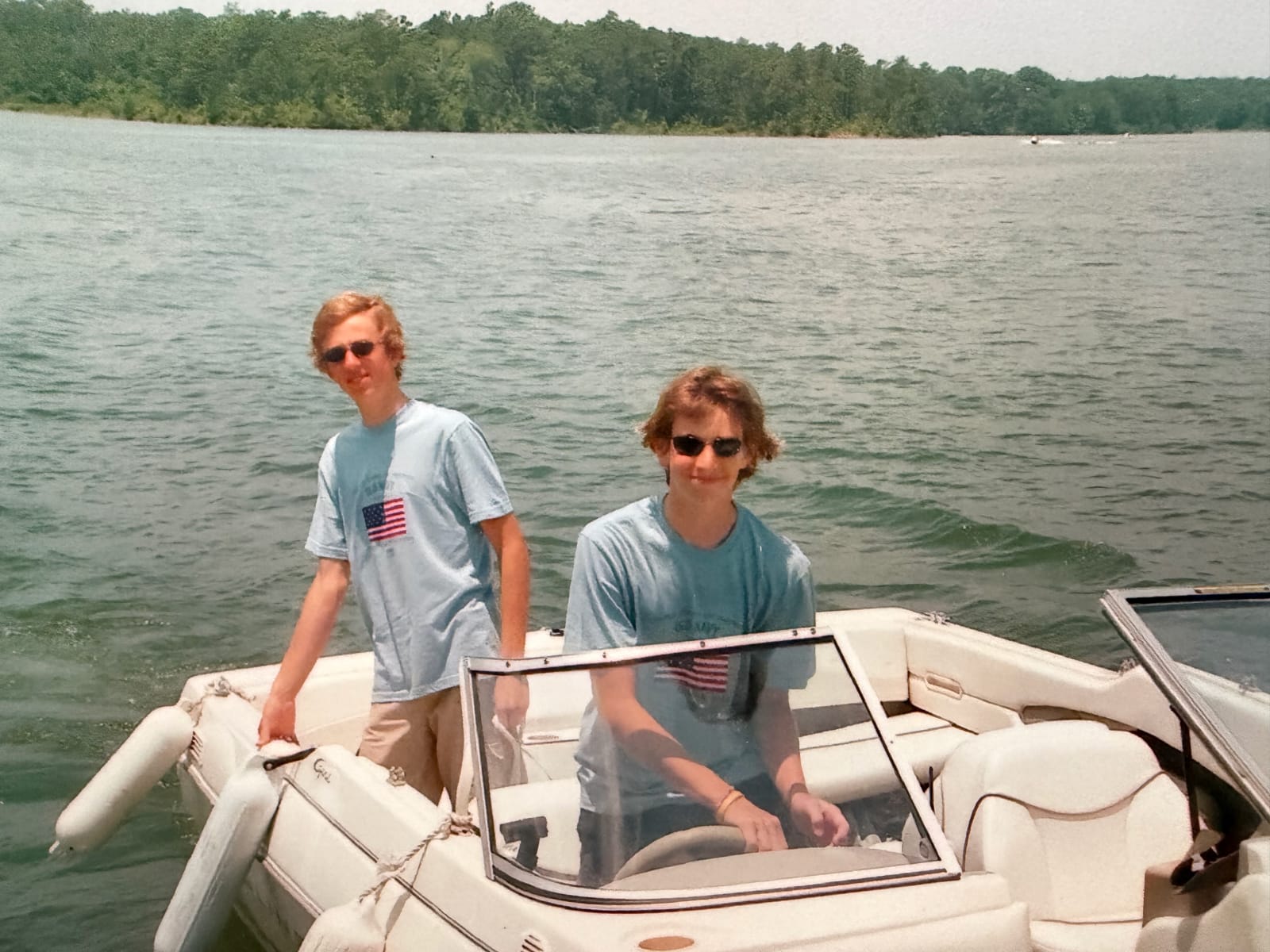
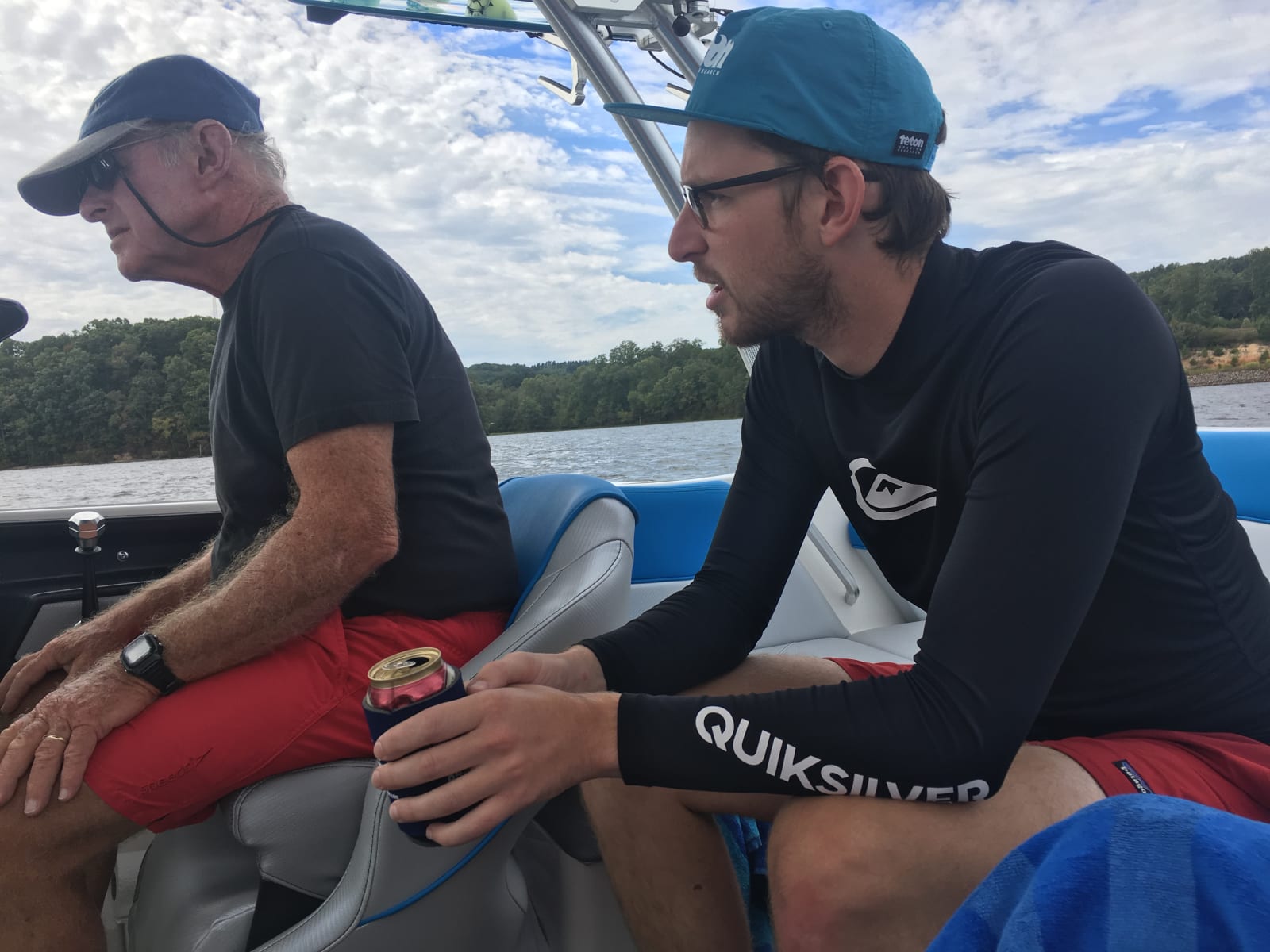
The editor of ICW News at the helm in Boston Harbor - August 1991, July 4th weekend 2005, and the editor and his father, Dan Houghton at the helm of the Mastercraft when visiting the Mainship 40 on Pickwick Lake during the great loop journey in 2017.
During the off-seasons from 1997-2006, Southern Harbor Marina was akin to a ghost-town. Aside from a few live-a-boards drinking blue ribbon beer from their respective front decks watching Nascar all weekend, almost no one was to be found on the docks or out on the lake. Most boats having been long winterized for the season.
That is, except for the harbormaster himself - Doyle Etheridge
Although I always knew the title was a bit of a joke coming from my dad, no one at the marina treated it as such. It was, after all - Doyle's "do anything" attitude that earned the title in the first place. One of my earliest memories is watching him pull a 65ft houseboat out with an old Bluebird School Bus while more than a dozen had come to the ramp just to see if the plan would work. MacGyver had nothing on Ole' Doyle.
As the former service manager at Nally Chevrolet for the bulk of his mechanical career, Doyle and my dad got along for many reasons - but their "we can fix this", solve any problem at the Marina attitude was clearly what drove them both. While the teaching opportunities for me as the observer were not always traditional in nature - I learned more from riding around in the old truck moving from dock to dock fixing little things here and there with Dad and the Harbormaster himself than I'll ever remember.
As those nine years of houseboat and Bayliner runabout life went on, I saw more and more examples of what not* to do on a boat. I've lost track of how many July 4th midnight emergencies my dad and I sprang into action to help a troubled captain who couldn't get their boat full of people back to shore, almost always with a tornado warning and supercell thunderstorm barreling down overhead. My job was straightforward as first mate: deliver the Captain to the vessel in trouble - return to the mothership, either already back at the marina or anchored from the bow and stern with Naval expertise.
Today, I'm so lucky to be a father myself to my own young man (even if he is indeed quite young in our toddler phase of life) - it's hard to imagine teaching and trusting him with the certainty that my dad exhibited in me as a young teenager in actually dangerous environments on the water. I can only conclude that his faith in those Maritime lessons were more than enough to execute the plan. He never left a boater adrift and would routinely arrive back in the Marina at the helm of yet another 100ft+ stardust houseboat and pull smoothly into a slip with less than six inches on either side - all without bow and stern thrusters or so much as a breath of anxiety.
Although it sounds insane, the whole dock gathered in the early AM hours to witness the events year after year. What can only be described as a redneck round of applause (complete with hoots and hollers) could be heard waking everyone in the marina, including the sailboat dock some 500 yards away. It's been said alcohol was involved in the celebrations, I just remember hearing that everyone was "shattered" by the time the dock lights switched off and everyone finally went to bed.
At the crux of those lessons on boating I received over the years - a core theme was consistently present:
"You are never going to live long enough to make the number of mistake you will need to learn from - so you better start learning from the mistakes of others"
As high school graduation drew near and I started worrying what I would do for a living we spent that final glorious summer on the boat. I was hoping to become a photojournalism major in college and dreamed of having my pictures on the front page of the newspaper one day. As such, in the spring of 2006 I started carrying my camera nearly everywhere after reading a quote that said "the best camera is the one you have with you".
One night in May, tragedy struck. The phone rang and soon my dad and I were untying the Bayliner along with a few other boats on A dock to head out and attempt to assist the local DNR, police and search & rescue efforts against a horrendous man overboard. When we learned we were searching for an 11 year old boy, our hearts sunk. We had been told "no lifejacket" but hoped to find him somewhere out in the channel.
After almost an hour of searching in nothing but moonlight, the local police helicopter circled low over the lake and came within a football field of our boat. I pulled out my Cannon camera and took one of the worst photographs I've ever made, a blurry - grainy sandpaper looking image of the helicopter hovering just over the water.
When I woke up the next morning, we still didn't have any news of a recovery. It was all the dock could talk about during morning coffee. At some point, I decided to call the local newspaper, the LaGrange Daily News - I had a photo of the search, would they be interested? It ran on the front page the next day, I was 17. My career as a news photographer was just beginning.
As you can imagine when someone goes overboard at night without a life jacket, no matter if it's in a 200ft deep lake or the Flemish Cap, chances of survival go to zero nearly instantly. Several days later we heard the news, his body was recovered. Closure for the family was the only good news. I remember watching my dad just shake his head in sadness. No one should ever lose their life because you didn't put a life jacket on a child.
While that was indeed a major formative event in my young adult life that pushed me to have the safety and humility based mindset I try and live life with every day - what I've learned in the years since has been incredibly clear. The best captains never stop learning.
Crossing the gulf of Mexi-America on thanksgiving day 2017 was a defining moment in boating life
Although I had no doubt in their ability or skills - I was still immensely proud of my mom and dad becoming Gold Loopers in 2017. Before they crossed their own wakes in my home waters of the TN River and Kentucky Lake, an opportunity to join them on their "big hop" crossing from Apalachicola to Tarpon Springs one evening nearly a decade ago was perhaps the most expensive night of my life.
It took me longer than the first radio check from Dog Island to get over the idea that yes, my mother and father did trust our small crew of three just enough to eschew hiring a professional captain for their second gulf crossing in their Mainship 40 - Time Out. By the time the dolphins had seen us out into the gulf and the focus had turned to engine room checks and helm rotations, I was purely hooked. I've spent the last 9 years since working hard enough to have the money and expertise to be here writing these words you read today. Now finally, it's time to return to the water in a more permanent state.
The Waterways are filled with remarkable knowledge
But it's scattered - weather in one place, lock notices somewhere else. A bridge schedule buried in a PDF. The best advice of all from locals is usually sitting on a dock in front of someone that happens to know. Somewhere in the middle of all that is a Captain trying to answer a simple question:
"should we move today - and if so, what do we need to know before we do"
ICW News was built to help answer that question. Not by replacing charts, official notices or good judgement. And certainly not by believing we know everything. The goal is much simpler than that: to create a place where the waterways become easier and more enjoyable to understand.
- A place where official sources are respected
- A place where local knowledge is preserved
- A place where lessons learned don't disappear when someone unties their lines and heads for the next harbor.
That's the philosophy you'll see throughout this publication. My personal promise to you is a publication that puts the recreational boat captain first.
As such, you will find no traditional "advertising" or "tracking" on this site, much less a username and password or subscription to access this premium content for free. Aside from the fact that you have a higher chance of becoming an Astronaut or being born a twin than you do remembering a display ad - most media websites you see today regurgitate press releases from manufacturers and otherwise make you (the audience) the product. I call bullshit on that - and assume you don't want another password to remember, another login to mess with, or another monthly fee just to go boating.
What I do believe in is earned trust, and the marine industry is filled with characters just like the harbormaster in my story above. These are the people that consistently save the day - be it 100-ton captain you're getting advice from, or a broker that will not steer you wrong and who forces an inspection against your cash paying overeager will.
Those experts will help make up the reporting, interviews and overall expertise of ICW News, alongside each of you as we learn to authentically tell the story of these waterways.
If you're reading these words, I owe you a sincere thank you. I eagerly await your feedback, tales of the sea and waterways we've grown to call home. It is after all, a privilege to navigate these waters. Something I'm not sure anyone who has ever traveled them would argue.
Calm seas and good weather. I hope to see you on the dock or on a hook. Until then, drop us a line through the Harbormaster's office. We can't wait to hear from you.
- The Harbormaster // ICW News Editor in Chief